
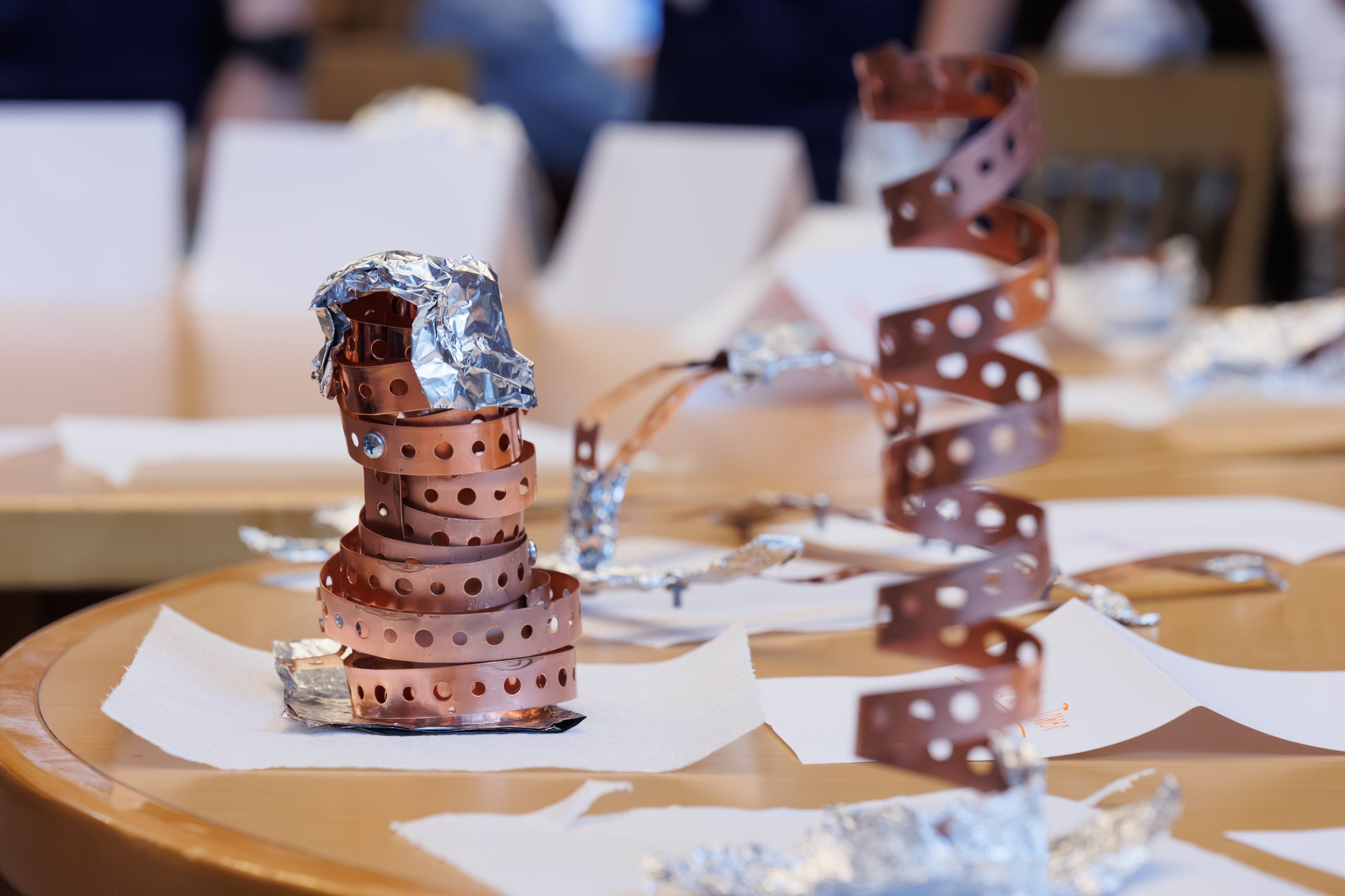
At Tapia Camps, we strive to give our campers experience with STEM topics that directly affect their lives and potential careers. This year is no exception. We are excited to announce that the theme of the 2026 Tapia STEM camps will be about Data Centers and their Impacts. Data centers are the backbone of modern computing. While they enable technologies like social media AI, they also pose significant challenges due to their high energy and water requirements. At our camps, students will learn physics, math, chemistry, computer science, and engineering as they explore data centers. Here are just a few examples of activities we have planned for our campers.
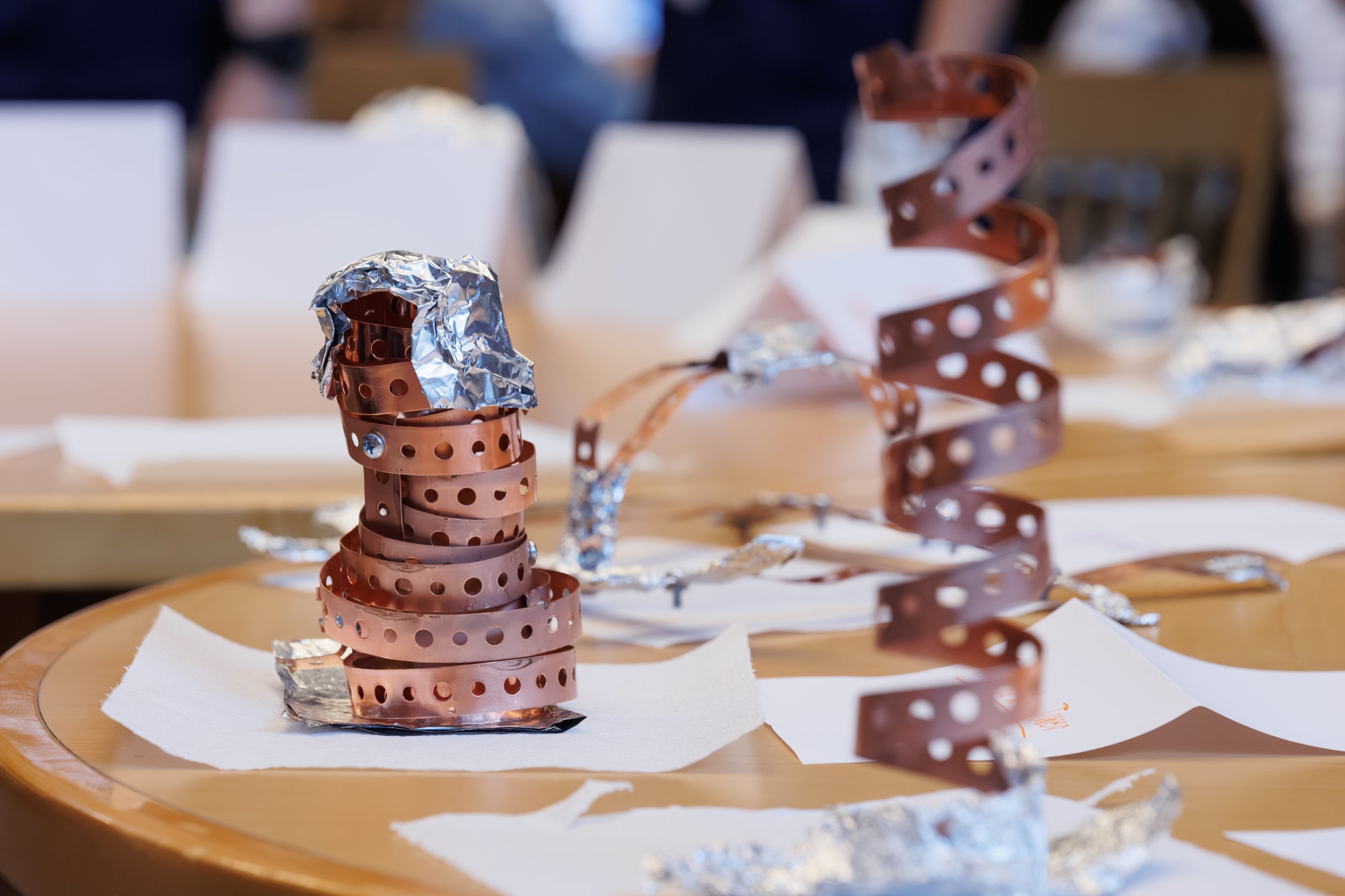
1.) Engineering Contest: Build a Heatsink.
In this activity, students design and test a device that melts an ice cube as fast as possible. Devices like these are known as heatsinks, and they are used to keep computers from overheating. They work by transferring heat as quickly as possible away from the computer. Students will explore heat transfer and the it’s relationship to surface area.
2.) Engineering Challenge: Build an efficient turbine.
Data centers produce a lot of energy. Usually, that energy is created by burning natural gas, which pushes on a turbine. Other energy sources, like wind also involve turbines. In this challenge, campers will design and test a turbine. They will compete for which can lift the most weight. Students will learn about physics and the engineering design cycle.
3.) Engineering Contest: Build a Model Carbon Storage Reservoir.
Data centers have a high electricity demand, which is usually generated from natural gas or other fossil fuels. Unfortunately, these methods produce carbon dioxide, a greenhouse gas that contributes to climate change. To mitigate the climate impact of carbon dioxide emissions, scientists and engineers are pursuing carbon capture and storage (CCS). With CCS, CO2 emissions are captured and safely stored deep underground. In this engineering contest, students will use pasta and Play-Doh to create a model CCS reservoir and try to store as much carbon dioxide, represented by vegetable oil, as possible without leaks. Students will learn about chemistry, math, and geology.
4.) Activity: Programming an algorithm for college admissions.
Data centers run algorithms and process large amounts of data. In this activity, students will create a fictional college or university. They will be presented with data on many fictional applicants to that school, and they will create and implement an algorithm to determine who they believe should be accepted. They will learn about computer science and the college admissions process.
5.) Activity: Decide if a video is fake by using STEM.
Data centers provide the computers that power artificial intelligence. Recently, AI is now good enough that it can create realistic-looking videos of things that never happened. This makes it hard for people to know whether to believe what they are seeing on social media and beyond. In this activity, students will watch several social media videos and decide whether they are fake using principles of physics and mathematics.
6.) Activity: Hiding secret messages in images.
As mentioned above, AI can generate images and videos that appear real, but are not. Some AI companies use algorithms to invisibly hide the message that the image or video was synthetically created. In this activity, students learn about one algorithm for hiding secret information in images. Additionally they will learn to hide their own secret message in an imperceptible manner. Students learn about computer science and algorithms.
As you can see, there is no shortage of hands-on activities that help students appreciate the role of data centers in society. These activities show many different career paths, and we hope students leave enthusiastic about how they can use STEM to make a big impact in the world.
— Dr. Paul Hand, Ph.D., Executive Director, Tapia Center
