
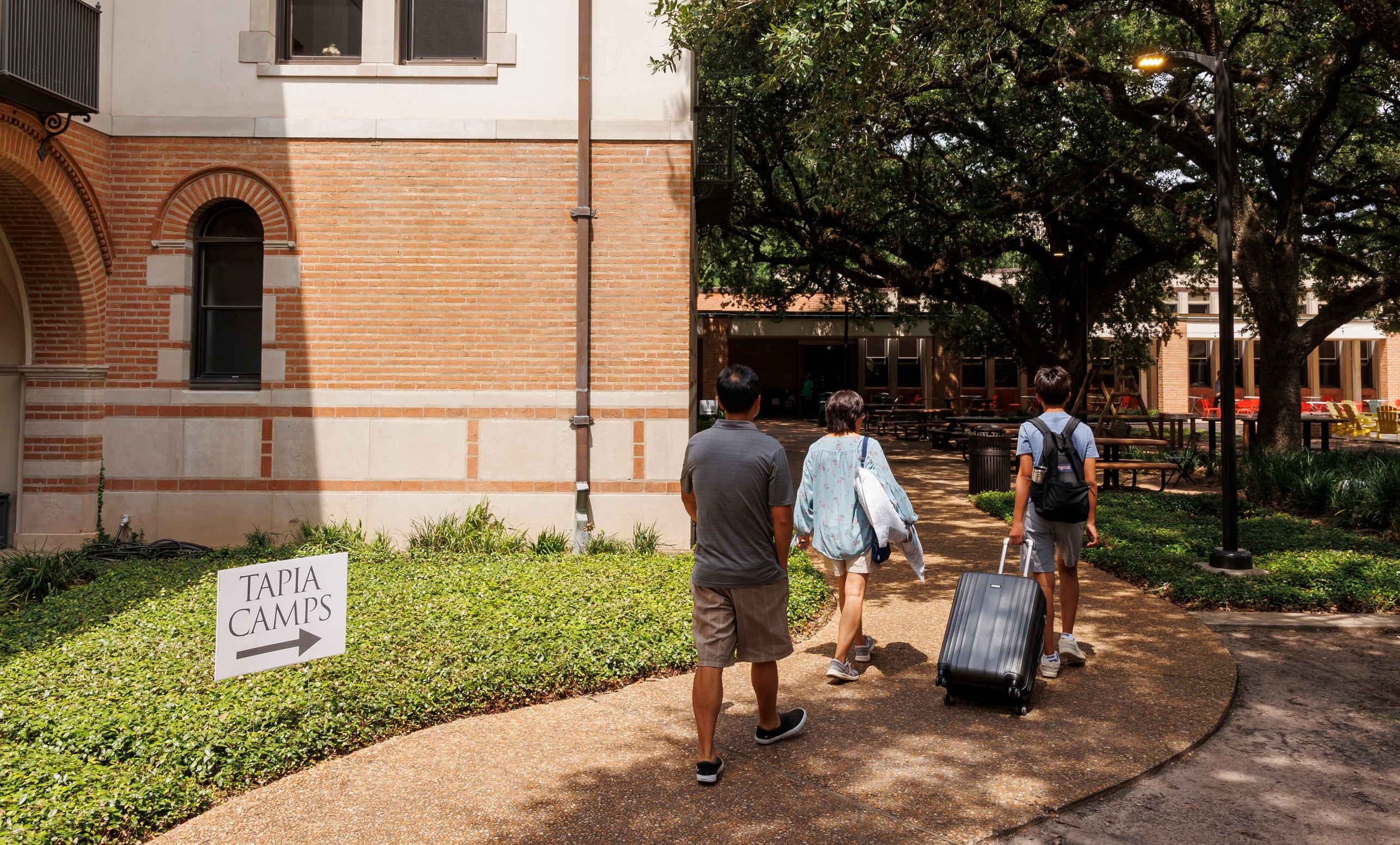
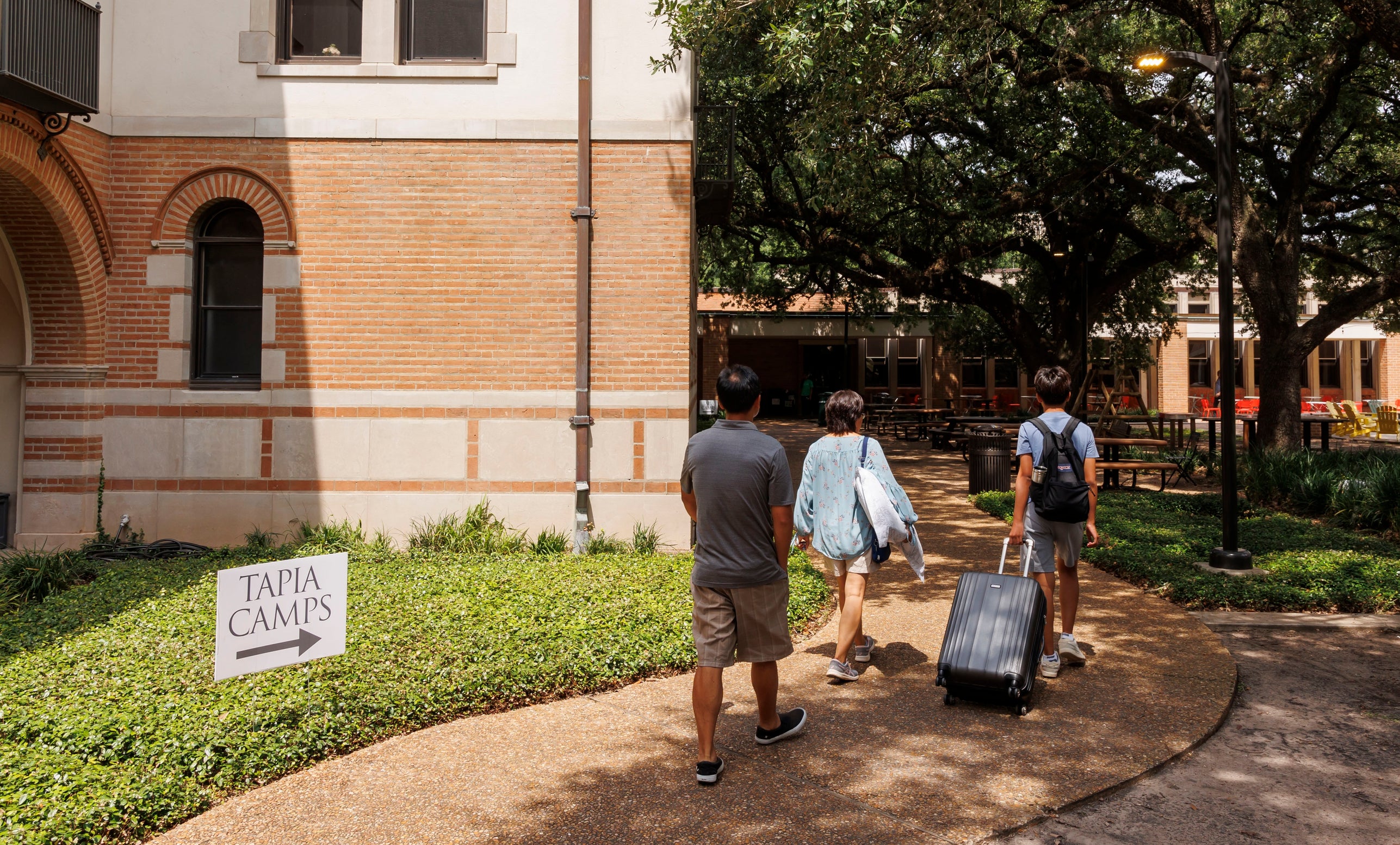
There are many studies that highlight the benefits of summer camp for young people. Campers grow in self-confidence and independence. They make new friends and gain new experiences. As a parent, you may be wondering what you can do to prepare your child to get the most out of their experience at camp. This blog post outlines three practical tips.
First, a scenario:
Your rose-smelling 15-year-old son goes to his room on Sunday night following our Scavenger Hunt. After running around Rice’s campus with his counselor group in the Houston summer heat, he is proud that his group won AND that he found other friends in the group who also love the Minnesota Vikings. As he gets ready to shower, he realizes he does not have a towel. No worries. He uses the same shirt he ran around in to dry off, climbs into bed, and then proceeds to scroll on social media until he falls into a deep sleep. The next morning, you call to check in. He tells you that everything is fine, his roommate is nice, and he is off to meet his group. During your evening call, he casually mentions that he does not have a towel, but reassures you that he used a clean t-shirt to dry himself this time. You gather a couple of towels and begin the 45-minute drive to camp at 11:00 pm. At 11:30, you remember to call the Camp Director to let him know you are coming. He informs you that the camp has spare towels. The director messages your son’s counselor at 11:45 pm, and the counselor leaves clean towels outside of your son’s room for him to use the next day.
What should you take away from this?
1. Encourage self-advocacy in your child.
There are always multiple staff members available at Tapia Camps. If your child needs something, please teach them to speak up! This could be a physical need, like the towel in the scenario, or something more personal, such as a concern with a roommate. Staff are there to help, and situations are usually resolved much more quickly when campers ask for help early.
This is also an important life skill that will help your child in high school, college, and beyond. The Camp Director, Dr. Hand, teaches college students and notices that they often wait too long to ask for help. Now is a great time to help your child develop this skill.
At Tapia Camps, we work to ensure that every camper feels a sense of belonging. This includes hiring a staff that can relate to campers from many different backgrounds. Our staff typically speaks roughly 10 different languages. Our staff training is roughly 50 hours long. We have staff who are former campers, staff who have returned for several years, and staff who have come on full-time after graduation. We are all here to assist your child. The sooner we know about a situation, the sooner we can work towards a resolution (and have better smelling campers!)
2. Differentiate between wants and needs with your child.
In the example above, a towel is a need. Imagine if the camper used dirty shirts all week, or avoided showering altogether. Yikes! Other needs might include a clogged toilet, feminine products, or our two most commonly forgotten items — hand soap and pillows. We intentionally keep items on hand for campers who need them.
Campers may also feel like they “need” someone to provide them with items that are not so essential. One example from a past year is a curling iron. (No, we did not provide the camper with a curling iron.) A recurring example is a cell phone charger. We do not provide campers with new phone chargers, but we do encourage using problem-solving skills and accepting natural consequences. For example, maybe they can borrow a charger from someone each morning. This may require them to limit their phone use or prioritize charging their phone over using their headphones.
At Tapia Camps, we do our best to provide anything your camper may need throughout the week. It can also be a great opportunity for them to learn the difference between what they want and what they need.
3. Have your child pack for themself, with guidance.
As someone who travels often, it would be great if someone could pack for me. However, I am not Beyoncé, and packing is a life skill. Some parents want to do this for their children, and that is a wonderful act of love. However, we ask that you allow your child to take the lead for camp.
First, campers need to know what they packed. Otherwise, they may not realize they have an item until the end of the week. Imagine if the camper’s toothbrush is at the bottom of the suitcase, and they don’t see it until Friday. Again, YIKES! Second, their packing service does not return on Friday to repack everything neatly. We love that you can fold, roll, tuck, and sort everything into exact spaces so everything fits neatly on Sunday. However, that means that on Friday, your camper might leave their room with a half-zipped suitcase, dirty undergarments shoved into a pillowcase, and a plastic shopping bag from NASA filled with their most important things, which they will inevitably leave behind when they depart campus. Please, provide guidance, but have your child take responsibility for packing.
These are just a few ways you can help your camper prepare for camp. We know that being in a new environment for a week can cause anxiety for both campers and parents. It would be foolish for us to tell you that your child will not have any stumbles along the way. They may need to learn how to live with a roommate and connect with someone who comes from a different background than them. They may discover that they are more interested in STEM than they thought. They may also realize that eating a plate of french fries for lunch is actually not a great idea.
Tapia Camps staff does not promise the lack of any discomfort, but we do promise a staff that is dedicated to providing a positive and meaningful experience for your child at Tapia Camps.
- Dr. Karen Kassekert, Assistant Director, Tapia Camps
