
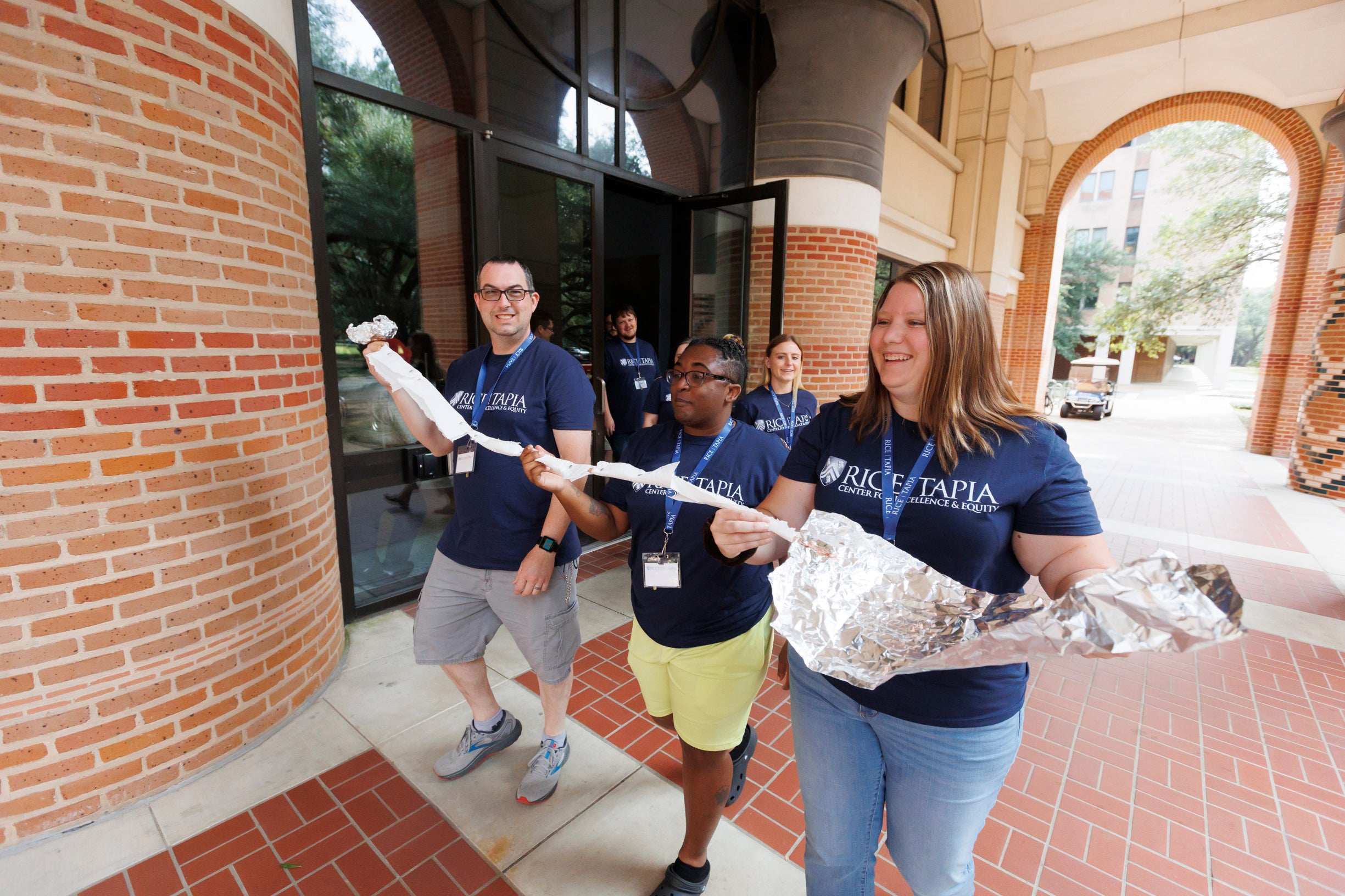
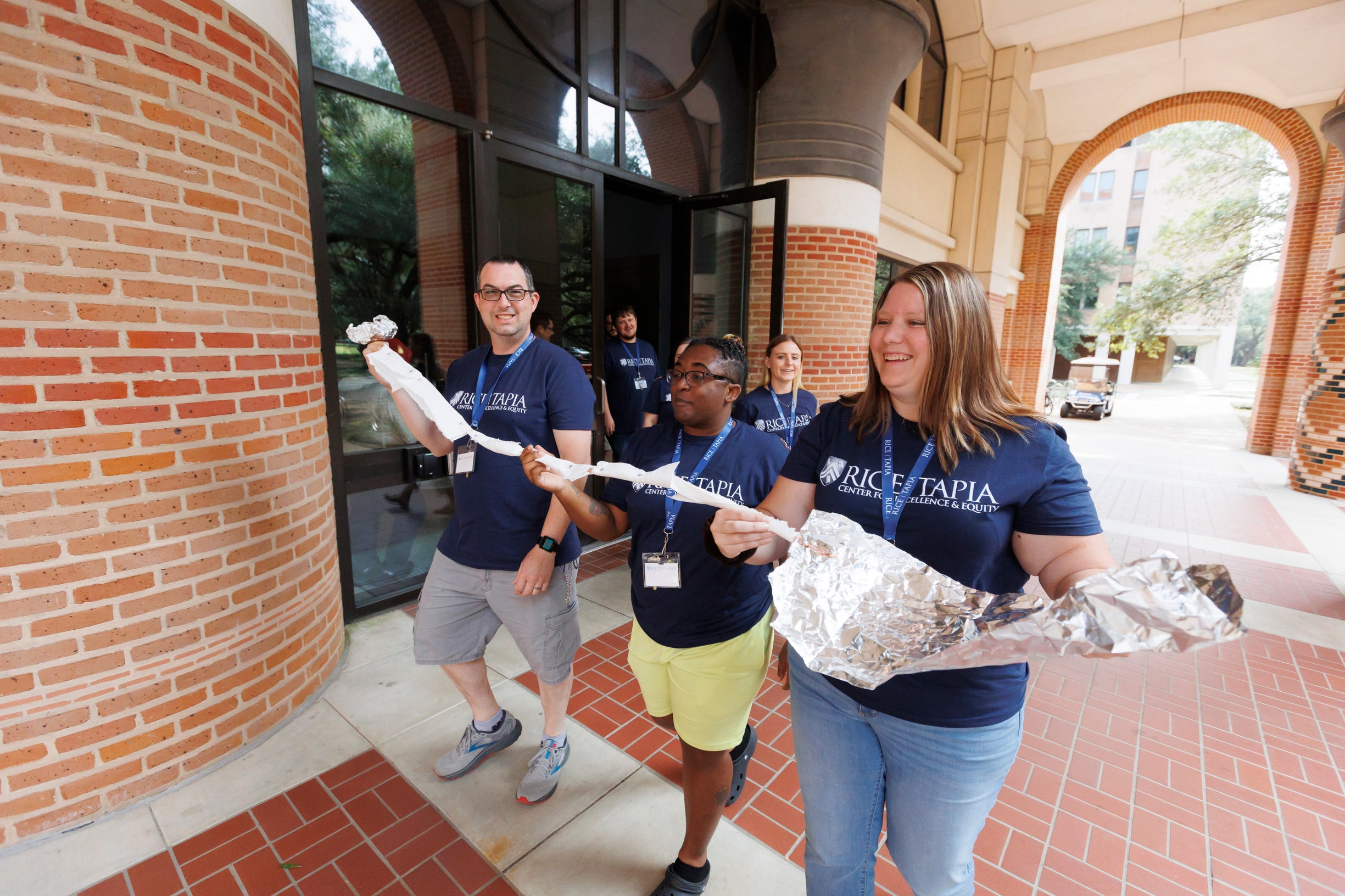
The Tapia Center has provided high-quality professional development for the past 10 years. Our cornerstone offering is a weeklong summer institute where educators live on campus and participate in learning sessions from Sunday evening through Friday afternoon. Throughout the week, participants explore the fundamentals of Project-Based Learning (PBL) while designing authentic, classroom-ready projects. Educators receive direct instruction, collaborate in groups, create presentations, and often have homework to complete after the sessions conclude. Many teachers describe our program as the most challenging—and most rewarding—professional development they have ever attended.
Over the years, educators have repeatedly asked for additional professional development opportunities through the center. Here are a few reasons why:
We are educators.
Dr. Paul Hand is a professor at the university level for undergraduate and graduate students. Mr. Oliver Jones brings over 20 years of experience in K–12 education as both a teacher and administrator. I have worked with students ranging from first grade through adult learners, primarily serving special populations, including alternative education, special education, and multilingual learners. While our work is grounded in research and best practices, our approach is shaped by real-world classroom experience. We understand the daily realities educators face and use those experiences to guide our training.
We adapt to the needs of educators in real time.
While each session is thoughtfully designed based on expertise and experience, we remain flexible and responsive. Some groups require deeper support in pedagogy, while others need more content-specific strategies. Our structure allows us to differentiate instruction, form breakout groups, and tailor learning to participant needs.
We do not pretend to have all the answers.
Instead, we provide educators with a robust collection of tools, resources, and professional networks. We intentionally connect participants through social media and professional communities so they can continue supporting one another beyond the training experience. As facilitators, we also reflect after each session to refine and strengthen our own practice.
Most importantly, we recognize educators as experts in their field. We design sessions that respect teachers’ time and honor their professional knowledge. We intentionally support the human side of teaching by providing food, fidget tools, classroom supplies, and flexible break opportunities. We gather ongoing feedback during sessions and conclude with participant reflections to ensure continuous improvement.
What does this look like, in practical terms?
We respect time.
We make icebreakers and opening activities relevant to the session. Educators take breaks as needed throughout the day, such as time to get coffee or take a walk. We do regular check-ins so we know how to pace the sessions, as no two groups are ever the same.
We seek participant voice and choice.
This means we ask if they would rather work through lunch and leave early, or if they want to have a brain break. Or, we come prepared with two sessions and allow the participants to choose with one better suits their needs. We expect that they are using the time to plan authentically for their classrooms.
The room often looks messy and may be loud.
Chart paper often covers the walls. Sticky notes are everywhere. Educators may be sitting on the floor or walking around. There is likely music playing in the background.
The participants are doing the majority of the talking.
The facilitators provide direct instruction and guidance as needed. The participants are taking time to interact with the material in such a way that it works for their specific classroom, not a theoretical one. The focus remains on transforming ideas into practical applications tailored to real classroom environments
It is fun!
The Tapia Center’s professional development model succeeds because it honors teachers as professionals, learners, and individuals. By combining research-based practices with authentic classroom experience, responsive facilitation, and meaningful collaboration, we create learning environments where educators feel valued, challenged, and inspired. When professional development is relevant, respectful, and empowering, teachers do not simply attend—they invest, engage, and return seeking more opportunities to grow. Ultimately, our goal is not only to improve instructional practice but to strengthen educator confidence, community, and capacity to impact students in meaningful and lasting ways. As one educator told us at the conclusion of the day, “I always bring a book to PD for when it gets boring. I did not open my book once today!”
By Dr. Karen Kassekert, Assistant Director, Tapia Camps
